Chapter 2: BONES & THE PELVIS
Lesson Introduction
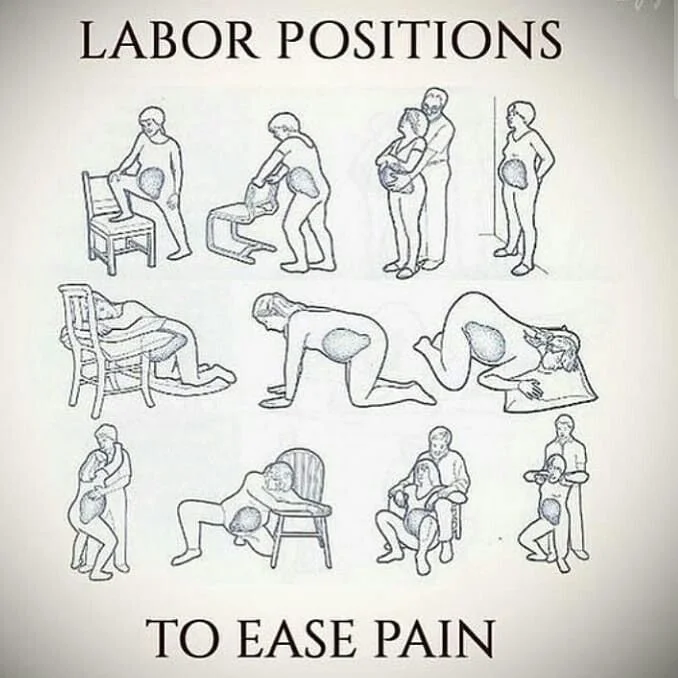
Movement and positioning are common parts of labor support. Standing, walking, kneeling, hands-and-knees, side-lying, and other positions may offer different experiences of comfort, pressure, and mobility.
The goal is not to make every client move in a particular way. It is to offer appropriate options, respect preferences, and adapt to the person's energy, comfort, clinical circumstances, and care team's guidance.
Tips & Tricks
Offer choices rather than commands.
Instead of saying, “You need to get up,” try:
“Would you like to try standing or swaying, or would resting feel better?”
Think in terms of comfort and adaptability. A position that feels good at one point in labor may not feel good later.
Remember that rest is also a position choice. Side-lying and supported resting positions may be helpful when someone is tired or needs a break.
Ask permission before helping. Explain the option, invite consent, and respect the client's response.
Avoid promising results. A position may be worth exploring, but it cannot guarantee rotation, faster labor, or a particular birth outcome.
Recommended Study Links
This clinical guidance discusses maternal position changes and ambulation during labor. Read it alongside your doula training and current local protocols.
Knowledge Check
How can position affect comfort and pelvic orientation?
Why is no single position best for everyone?
What does consent look like when offering position changes?
When should a doula check with the care team?
How can a doula avoid making unsupported promises?