Chapter 3: MUSCLES AND THE PELVIC FLOOR
Meet the Pelvic Floor
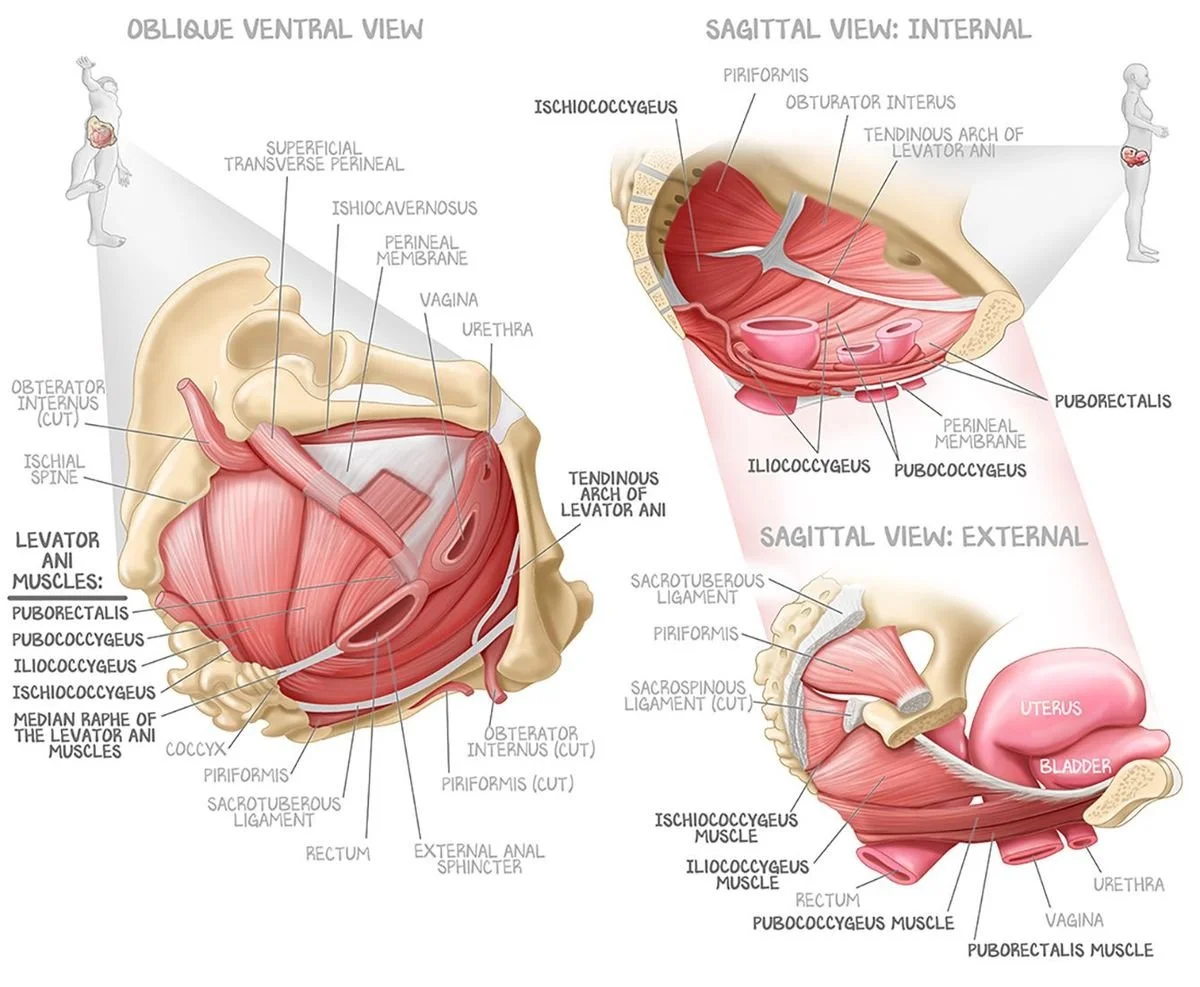
The pelvic floor is a group of muscles and supporting tissues at the base of the pelvis. These structures help support pelvic organs, contribute to bladder and bowel control, and participate in pressure management and movement.
Pregnancy and birth can affect pelvic floor function, but every person's experience is different. Pelvic floor concerns are not always visible, and a doula should never attempt to diagnose them through observation alone.
Key Takeaways
The pelvic floor forms a supportive muscular base within the pelvis.
It helps support the pelvic organs and contributes to bladder and bowel control.
Pelvic floor function involves coordination, strength, and the ability to relax.
A client may have pelvic floor concerns before pregnancy, during pregnancy, or after birth.
Assessment and treatment of pelvic floor symptoms belong to appropriately qualified healthcare professionals.
Review prompts such as:
Where is the pelvic floor located?
What structures does it help support?
What does it mean for a muscle to contract?
What does it mean for a muscle to relax?
What concerns might prompt a client to seek professional pelvic health support?
Keep Learning
Recommended article: Pelvic Support Problems — ACOG
This resource explains pelvic organ support and some concerns that can arise when supporting tissues change. Read it to improve your general understanding—not to diagnose a client or recommend treatment.
Additional resource: Pelvic Floor Muscles — NHS inform
This article provides an accessible overview of pelvic floor function and the importance of allowing the muscles to relax between contractions.
Study Flashcards
Suggested Quizlet set: Pelvic Floor Anatomy and Function
Add these terms:
Pelvic floor
Pelvic organs
Bladder
Uterus
Rectum
Continence
Muscle contraction
Muscle relaxation
Pelvic floor physiotherapist
Study challenge: Explain why pelvic floor function involves more than simply having strong muscles.
Knowledge Check
Where is the pelvic floor located?
Name two functions of the pelvic floor.
Is pelvic floor strength the only measure of healthy muscle function?
What should you do if a client describes pelvic pain, persistent leaking, a feeling of heaviness, or another concerning symptom?
Doula practice reminder: Listen without judgment, respect the client's privacy, and encourage them to discuss concerns with an appropriate healthcare professional. Do not diagnose or prescribe pelvic floor exercises.
Reflection: How could you respond if a client says, “I think something is wrong with my pelvic floor”?
Next up: Lesson 3 — Tension and Relaxation.