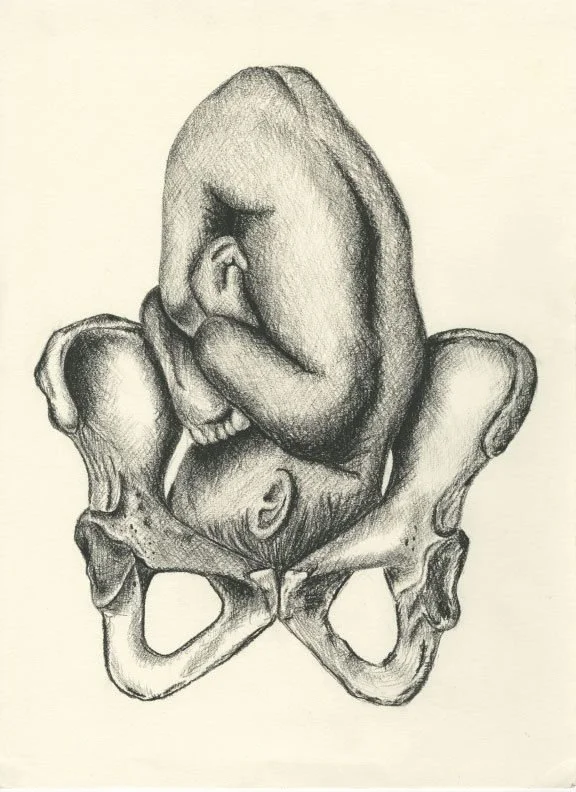
Chapter 2: BONES & THE PELVIS
Bones & the Pelvis
Welcome to the Chapter
The human body is beautifully interconnected. Bones provide structure, joints allow movement, muscles support stability, and soft tissues adapt to changing demands. During pregnancy and birth, these systems work together in ways that help us better understand movement, comfort, and the mechanics of labor.
In this chapter, you will explore the skeletal system, the pelvis, the pelvic floor, and the relationship between anatomy and birth. You will also learn how to apply this knowledge in a doula setting while respecting each client's unique experience.
What You Will Learn
By the end of this chapter, you should be able to:
Identify the major bones and structures relevant to birth.
Describe the basic anatomy of the pelvis.
Explain the roles of the pelvic floor and pelvic joints.
Recognize important anatomical terms used in birth settings.
Discuss movement and positioning in an evidence-informed way.
Apply anatomical knowledge while remaining within the doula's scope of practice.
Tips for Studying Anatomy
Start with the big picture. Learn where a structure is located before memorizing its name.
Study pictures from different angles. The pelvis looks different from the front, back, side, and top.
Say the terms out loud. Practice explaining anatomical words in everyday language.
Connect anatomy to doula work. Ask yourself, “How could knowing this help me understand what a client or care provider is describing?”
Your Chapter 2 Study Plan
Watch the overview slideshow.
Complete the Bones lesson.
Study the Pelvis lesson.
Explore the Pelvic Floor.
Learn about Movement and Positioning.
Study the Baby's Journey Through the Pelvis.
Complete the Doula Application lesson.
Finish the chapter workbook and review quiz.
Your Doula Reflection
Before moving on, consider this question:
How can learning the anatomy of birth help me support someone without making assumptions about their body or their birth outcome?